
Natural Black vs Dark Brown Hair Color: Which Is Better for Grey Hair?
When comparing natural black vs dark brown hair color for grey hair, the better choice depends mainly on your natural hair color and how much...


Category:Hair Color
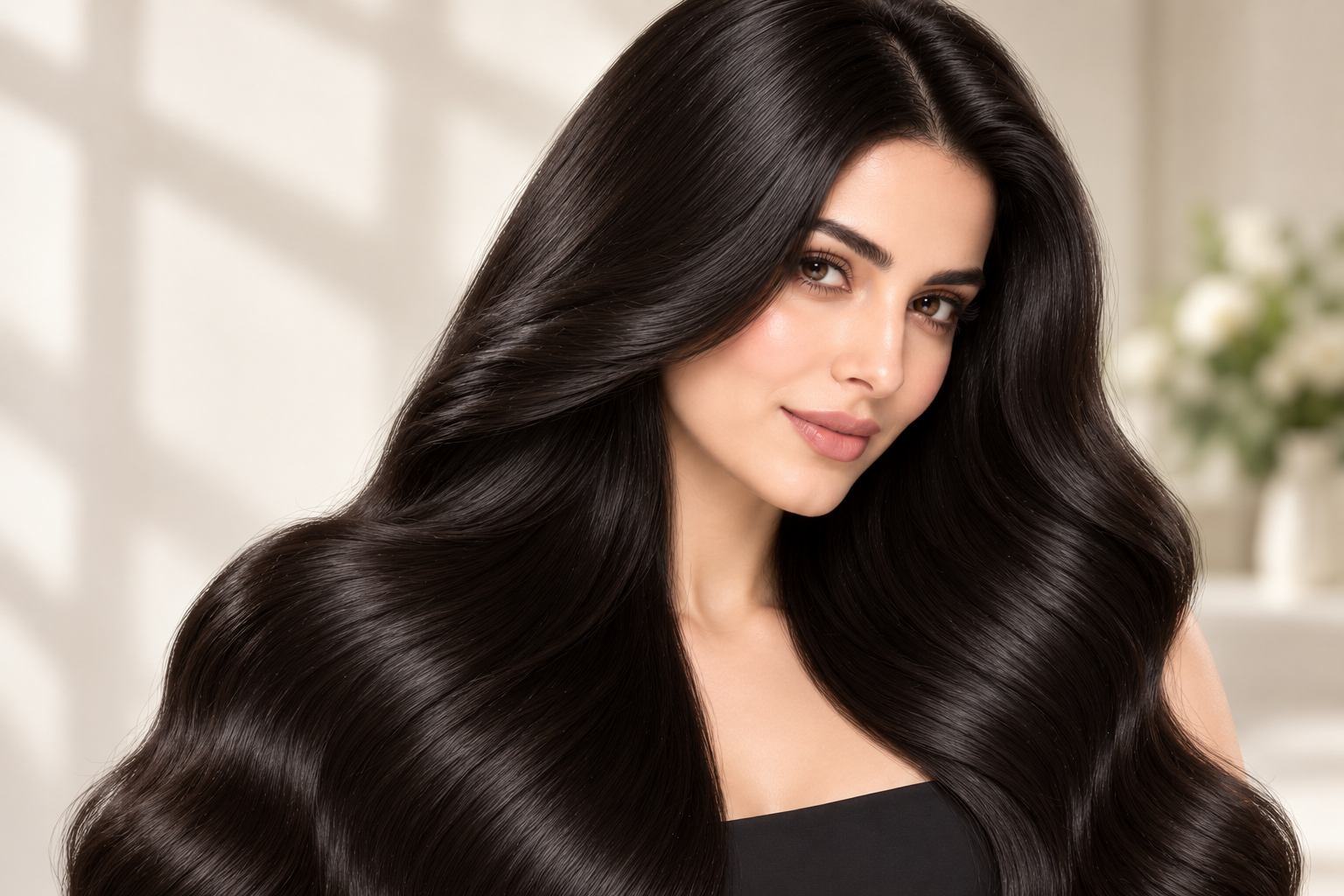
What is the best hair color for 100% grey coverage? The right choice is a hair color specifically formulated for complete grey coverage, available in a shade close to your desired result and suitable for your preferred application method.
For many people, crème hair color is a practical choice because its consistency allows controlled application around grey roots, temples and the hairline. Henna-based hair color can be another option for people who prefer a henna-oriented formulation.
Natural Black, Original Black, Dark Brown and Natural Brown are among the most useful shades for natural-looking grey coverage, but the best shade depends on your original hair color and desired result.
The best hair color for complete grey coverage should have five important characteristics:
Do not assume that every hair-color product provides the same level of grey coverage.
If 100% grey coverage is your priority, look for a product where the manufacturer specifically makes that claim.
For example, Nisha Crème Hair Color is formulated to provide 100% grey coverage from roots to tips and is available in multiple natural and fashion shades.
Several hair-color formats can be designed for grey coverage.
The main options include:
| Hair Color Type | Best Suited For | Main Advantage |
|---|---|---|
| Crème Hair Color | Full grey coverage and roots | Controlled, even application |
| Shampoo-Based Hair Color | Convenient grey coloring | Faster, simpler application |
| Henna-Based Hair Color | Henna-oriented grey coverage | Defined shades with henna-based formulation |
| Traditional Henna | Traditional henna users | Classic henna coloring experience |
There is no single format that is best for everyone.
For precise and controlled grey coverage, crème hair color can be particularly useful.
For people who prioritize convenience, shampoo-based hair color may be preferable.
For people specifically looking for henna-oriented coloring, formulated henna-based hair color can be considered.
Crème hair color has a smooth consistency that makes it easier to control where the product is applied.
This matters because grey hair is often particularly noticeable around:
A crème formula can be applied systematically to these areas before being distributed through the remaining hair as directed.
This makes crème hair color a practical option for people looking for 100% grey coverage, especially when a large percentage of their hair has turned grey.
When comparing crème hair colors, look for products that explicitly state complete grey coverage.
Nisha Crème Hair Color from Yuthika Natural is formulated for 100% grey coverage from roots to tips when used according to its instructions.
The range combines crème colorant with developer and is designed for controlled at-home application.
It is also available in multiple natural and fashion shades, meaning complete grey coverage does not necessarily require coloring your hair black.
The best shade depends on your original hair and the final appearance you want.
For natural-looking grey coverage, four shades are particularly useful to consider.
Natural Black can be a suitable option if your existing hair is naturally very dark.
It helps grey strands blend with surrounding black hair while maintaining a natural-looking dark result.
Original Black can be considered when you want a deeper and richer black appearance.
If you prefer intense black rather than a softer natural black, this may be more appropriate.
Dark Brown can be an excellent alternative for people who find black too intense.
It can provide softer-looking grey coverage while maintaining a dark overall appearance.
Natural Brown can work well if you want a more noticeable brown appearance while still maintaining a natural-looking result.
The best choice depends on your natural hair color, percentage of grey hair and desired level of contrast.
Natural Black is one of the most practical shades for grey coverage when your surrounding hair is naturally black or very dark.
It can help grey strands blend naturally into the darker lengths.
However, Natural Black is not automatically the best shade for everyone.
If your original hair is dark brown or you prefer a softer result, Dark Brown may be more flattering.
If you want an obvious brown transformation, Natural Brown or Chocolate Brown may be more appropriate.
Both shades can cover grey hair when the product is specifically formulated for grey coverage.
The difference is mainly the desired appearance.
Natural Black is useful when you want a softer, natural-looking black result.
Original Black is useful when you prefer a deeper, richer black.
If you are unsure, choosing a shade closer to your original hair color usually creates a subtler result.
This is one of the most useful decisions for people with grey hair.
Natural Black creates a darker overall appearance and may be appropriate when your remaining natural hair is black.
Dark Brown provides softer contrast.
It may be worth considering if:
Neither shade is universally better.
The goal should be to select the shade that blends naturally with your remaining hair.
Yes—provided the specific brown hair-color product is formulated for complete grey coverage.
You do not need to choose black simply because you have grey hair.
Depending on the product range, grey-coverage shades can include:
This gives you more flexibility to create a softer or more noticeable transformation.
Fashion shades can also be formulated for grey coverage.
The important factor is not whether a shade is black, brown or red.
It is whether the specific product and shade are designed to cover grey hair.
For example, Nisha Crème Hair Color includes natural shades as well as Burgundy, Mahogany, Copper Red and other fashion shades within its broader range.
This allows grey coverage to become part of a color transformation rather than simply a way of returning hair to black.
For stubborn grey areas, prioritize a product specifically formulated for complete grey coverage and a format that allows precise application.
Crème hair color can be particularly useful because you can carefully apply it around resistant or highly visible areas such as:
The application technique also matters.
Even a product designed for complete grey coverage may give uneven results if sections of grey hair do not receive enough product.
Uneven grey coverage can occur for several reasons.
Every grey strand needs adequate contact with the coloring mixture.
Temples, roots and the back of the head can easily be missed during self-application.
If a product requires colorant and developer, use the specified quantities and mixing instructions.
Rinsing too early can affect the intended result.
Leaving hair color on substantially longer than instructed is also not recommended.
Not every coloring product is designed for complete grey coverage.
If grey coverage is the main goal, select a product that explicitly addresses it.
For even coverage, preparation and systematic application matter.
Divide your hair into manageable sections and make sure the coloring product reaches all visible grey areas.
Pay particular attention to the roots, temples and hairline.
Apply enough product to saturate the required sections evenly.
Follow the manufacturer’s recommended processing time rather than estimating it yourself.
If your hair is long or particularly dense, make sure you have enough product to cover all the required hair before you begin.
If most of your hair is grey, choose a product specifically designed for complete grey coverage.
Shade choice becomes particularly important because a lighter starting base can make the final color appear more noticeable.
If you want to recreate naturally dark hair, consider:
Natural Black for a natural-looking dark result.
Original Black for a deeper black.
Dark Brown for a softer dark appearance.
Natural Brown for a more visible brown result.
For predominantly grey hair, complete and even application is especially important because missed areas will be more noticeable.
For grey roots, look for a product that combines dependable grey coverage with controlled application.
Crème hair color can be useful because it can be placed precisely around the regrowth without unnecessarily concentrating the application elsewhere.
Pay particular attention to:
The shade should also blend with your previously colored lengths.
Grey hair around the temples is often highly visible because it frames the face.
A controlled application format such as crème hair color can make it easier to cover this area carefully.
Select a shade that matches the surrounding hair and ensure that the product fully covers the grey strands.
Do not increase processing time beyond the manufacturer’s instructions simply because the temple area appears resistant.
Nisha Crème Hair Color is specifically formulated for grey coverage.
Yuthika Natural states that the product provides 100% grey coverage from roots to tips when used as directed.
Its creamy texture is designed for even application, and the range includes multiple shades for people who want natural-looking coverage as well as more noticeable color transformations.
The formula is also ammonia-free and contains Sunflower, Avocado and Henna extracts.
The best Nisha shade depends on the result you want rather than the amount of grey hair alone.
Consider this if your remaining hair is naturally black and you want a natural-looking dark result.
Consider this if you prefer a richer and deeper black appearance.
Consider this if you want softer-looking dark grey coverage.
Consider this if you want a more noticeable brown transformation.
Nisha Crème Hair Color also offers additional brown, red, burgundy and blonde shade options for people who want to combine grey coverage with a more visible color change.
Nisha Crème Hair Color is described by Yuthika Natural as having a no-ammonia formulation.
This can be relevant for consumers specifically looking for an ammonia-free hair-color option.
However, ammonia-free should not be interpreted as chemical-free.
Hair-color products contain ingredients necessary for their specific coloring systems, so always review the complete ingredient declaration and safety information.
Formulated henna-based hair color can be designed for complete grey coverage.
It is important to distinguish it from traditional pure henna.
Pure henna naturally creates characteristic warm tones, while formulated henna-based hair color can be available in more defined shades.
For example, Nisha Natural Henna-Based Hair Color is positioned for complete root-to-tip grey coverage and includes shades such as:
This can make it an option for people who specifically prefer a henna-based coloring format.
Both can be formulated for grey coverage, but they offer different experiences.
Consider crème hair color if you want:
Consider formulated henna-based hair color if you want:
The better choice depends on your formulation preference and desired shade.
The main difference is convenience versus application control.
Shampoo-based hair color can be useful when quick and convenient application is important.
Crème hair color can be useful when precise placement and controlled coverage are priorities.
For extensive or stubborn grey hair, some users may prefer the control offered by crème color.
For convenient maintenance, shampoo-based color may be attractive.
Always compare the claims and directions of the specific products rather than assuming that every product within a format performs identically.
It can be.
The absence of ammonia does not automatically determine whether a hair color can cover grey hair.
Grey-coverage performance depends on the overall formulation.
For example, Nisha Crème Hair Color is described as ammonia-free while also being specifically positioned for 100% grey coverage.
Therefore, evaluate the complete product rather than judging grey coverage from a single ingredient claim.
The term “herbal” by itself does not guarantee complete grey coverage.
A hair-color product may contain herbal ingredients while using other ingredients as part of its coloring system.
If 100% grey coverage is important, look for an explicit grey-coverage claim rather than relying on words such as:
These terms describe aspects of a formulation but do not independently establish its grey-coverage performance.
Hair-color selection does not have to be based primarily on gender.
Both men and women can choose according to:
Nisha Crème Hair Color, for example, is suitable for both men and women.
Natural Black, Original Black and Dark Brown may be popular choices for subtle grey coverage, while broader brown, burgundy and red families can provide more visible transformations.
Start with your natural hair color and the result you want.
If you want your grey hair to blend with naturally black hair, consider Natural Black.
If you want a deeper black, consider Original Black.
If black feels too intense, consider Dark Brown.
If you want a visible brown result, consider Natural Brown or Chocolate Brown.
The farther you move from your natural shade, the more noticeable the transformation can be.
Neither is automatically correct.
A shade close to your natural hair usually creates a subtler result.
A significantly darker shade can create greater contrast when new grey roots grow.
A slightly softer brown may make the transition between regrowth and colored hair appear less intense for some people.
Choose according to the final appearance and maintenance routine you want.
Yes, products specifically designed for at-home grey coverage can provide complete coverage when used correctly.
The key is to follow the exact instructions supplied with your chosen product.
Before coloring, read the instructions completely.
Perform the required allergy alert test.
Prepare the product using the stated quantities.
Apply it thoroughly to all grey sections.
Follow the specified processing time.
Rinse and use any supplied post-color conditioner as instructed.
There is no universal processing time for all hair colors.
Follow the processing time specified for your exact product.
For example, current instructions for Nisha Crème Hair Color specify a 30-minute processing period before rinsing.
Different formulations can have different instructions.
Leaving color on longer than recommended does not automatically improve grey coverage.
Follow the instructions for the exact product you are using because preparation requirements can vary.
Do not assume that a generic hair-coloring rule applies to every formulation.
The manufacturer’s instructions should take priority over general online advice.
How often you need a root touch-up depends on:
A person coloring grey roots Natural Black may notice regrowth more quickly because of the contrast between white/grey roots and dark lengths.
A softer shade such as Dark Brown may make that contrast appear less pronounced for some people.
Follow the product’s directions regarding repeat applications.
Hair-color longevity depends on the product, hair condition and maintenance routine.
Helpful habits include:
Remember that fading and root regrowth are different.
Even when the color remains vibrant on the lengths, new grey hair will become visible as your hair grows.
Check the exact product and its grey-coverage claim.
Products and formulations vary.
Dark Brown or Natural Brown may create a more natural result for some people.
These areas can be highly visible and require careful application.
Dense or long hair may require more product for complete saturation.
Follow the manufacturer’s stated timing.
More time does not automatically mean better coverage.
Always follow the manufacturer’s safety and allergy-testing instructions, even if you have colored your hair before.
| Your Need | What to Consider |
|---|---|
| Natural-looking black coverage | Natural Black |
| Deep black coverage | Original Black |
| Softer dark coverage | Dark Brown |
| Natural brown result | Natural Brown |
| Richer brown transformation | Chocolate Brown |
| Precise root coverage | Crème hair color |
| Stubborn temple greys | Controlled crème application |
| Convenient application | Shampoo-based hair color |
| Henna-oriented option | Formulated henna-based hair color |
| Ammonia-free preference | Specifically labeled ammonia-free color |
| Mostly grey hair | Product specifically claiming complete grey coverage |
| Fashion transformation | Grey-coverage product in Burgundy, Mahogany, Red or other suitable shades |
The best hair color for 100% grey coverage is a product specifically formulated for complete grey coverage and available in a shade appropriate for your natural hair and desired result. Crème hair color is a practical option because it provides controlled application, particularly around roots and temples.
Look for a specific product that explicitly states 100% or complete grey coverage. Nisha Crème Hair Color is one example that Yuthika Natural positions for 100% root-to-tip grey coverage.
A product designed for complete grey coverage combined with careful, controlled application can be useful for stubborn greys. Crème hair color allows precise application around the temples, roots and hairline.
Natural Black can be a good choice when the product is formulated for complete grey coverage and your surrounding hair is naturally black or very dark.
Yes. Dark Brown can provide a softer alternative to black and may create more subtle-looking grey coverage.
Natural Black works well when you want to maintain a naturally black appearance. Dark Brown is useful if you prefer softer contrast. Neither is universally better.
Yes, if the specific brown hair color is formulated for complete grey coverage. Dark Brown and Natural Brown are common options.
Yuthika Natural states that Nisha Crème Hair Color provides 100% grey coverage from roots to tips when used according to the product instructions.
Yes. Yuthika Natural describes Nisha Crème Hair Color as having a no-ammonia formulation.
A formulated henna-based hair color can be designed for complete grey coverage. Nisha Natural Henna-Based Hair Color, for example, is positioned for root-to-tip grey coverage and is available in defined shades including Natural Black, Original Black, Dark Brown and Natural Brown.
Crème hair color offers controlled application and broader shade flexibility. Henna-based hair color may suit people who specifically prefer a henna-oriented formulation. Choose according to your desired shade, formulation and application routine.
Crème hair color offers greater control during application, while shampoo-based hair color prioritizes convenience. The right choice depends on the amount and location of your grey hair and your preferred coloring routine.
Yes. Many hair-color products are designed for at-home grey coverage. Follow the manufacturer’s preparation, allergy-testing, application, processing and rinsing instructions carefully.
Possible reasons include incomplete application, insufficient product, missed sections, incorrect mixing or processing, or using a product not specifically formulated for complete grey coverage.
No. Follow the processing time stated by the manufacturer. Leaving the product on longer than instructed does not automatically improve coverage.
The best hair color for 100% grey coverage is a product specifically formulated for complete grey coverage, combined with the right shade and correct application.
If you want controlled root-to-tip application and a broad shade selection, crème hair color is a strong option.
If convenience is your priority, consider a shampoo-based hair color specifically designed for grey coverage.
If you prefer a henna-oriented formulation, a formulated henna-based hair color designed for complete grey coverage can be considered.
For the shade:
Choose Natural Black for natural-looking dark coverage.
Choose Original Black for a deeper black.
Choose Dark Brown for softer grey coverage.
Choose Natural Brown or Chocolate Brown for a more visible brown transformation.
Within Yuthika Natural’s portfolio, Nisha Crème Hair Color is a strong option to consider for 100% grey coverage because it is specifically formulated for root-to-tip grey coverage and is available across multiple natural and fashion shades.
Nisha Natural Henna-Based Hair Color provides another option for consumers looking for complete grey coverage in a henna-based format.
The most important rule is simple:
Don’t choose hair color based only on the shade shown on the pack. Choose a product specifically formulated for grey coverage, select a shade that works with your natural hair, and follow the application instructions carefully.
For a broader brand-level comparison, read Which Hair Color Brand Is Best for Grey Hair in India?
For the complete buying guide, read Best Hair Color Brand in India: How to Choose the Right One.
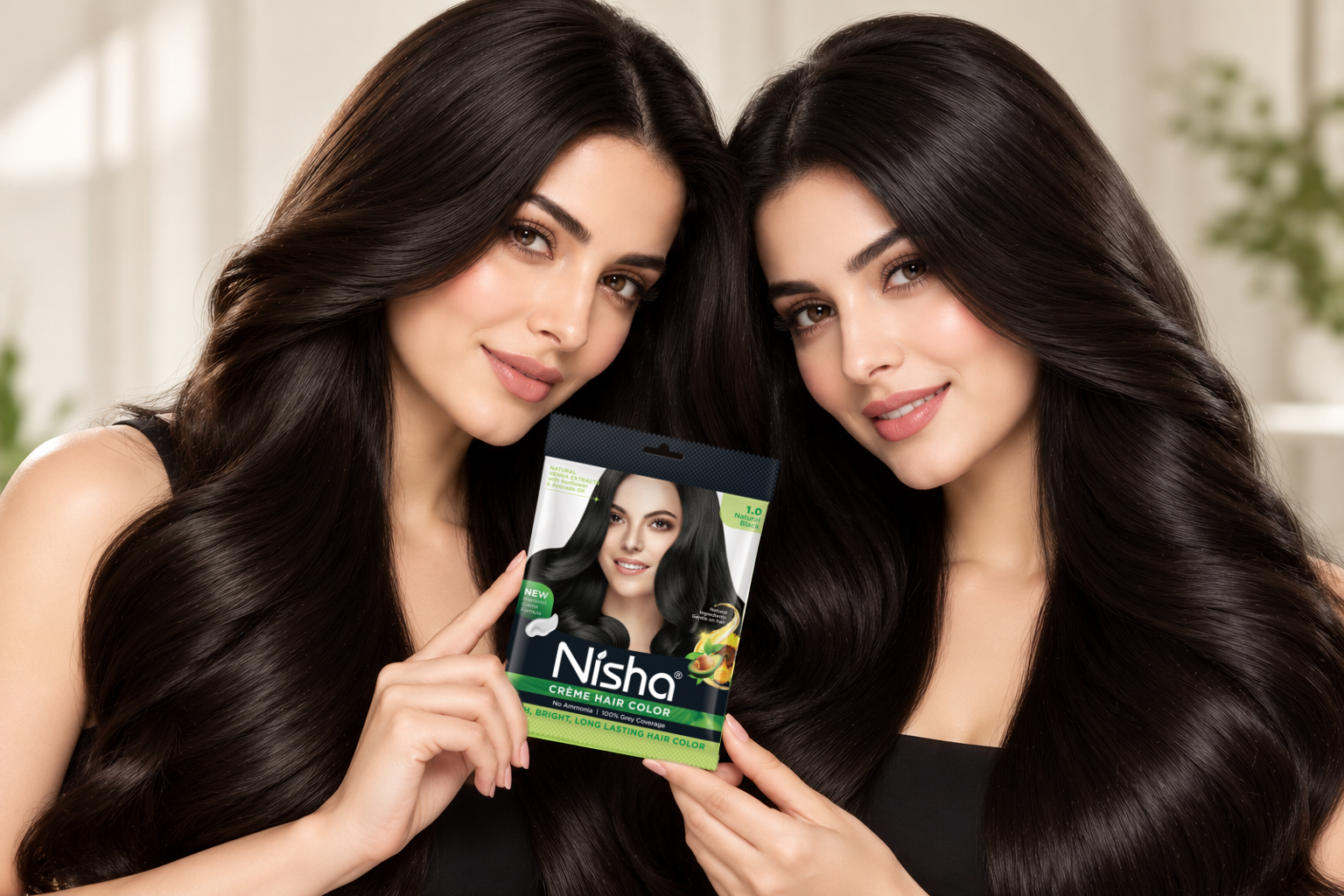
When comparing natural black vs dark brown hair color for grey hair, the better choice depends mainly on your natural hair color and how much...
What is the best hair color for 100% grey coverage? The right choice is a hair color specifically formulated for complete grey coverage, available in...
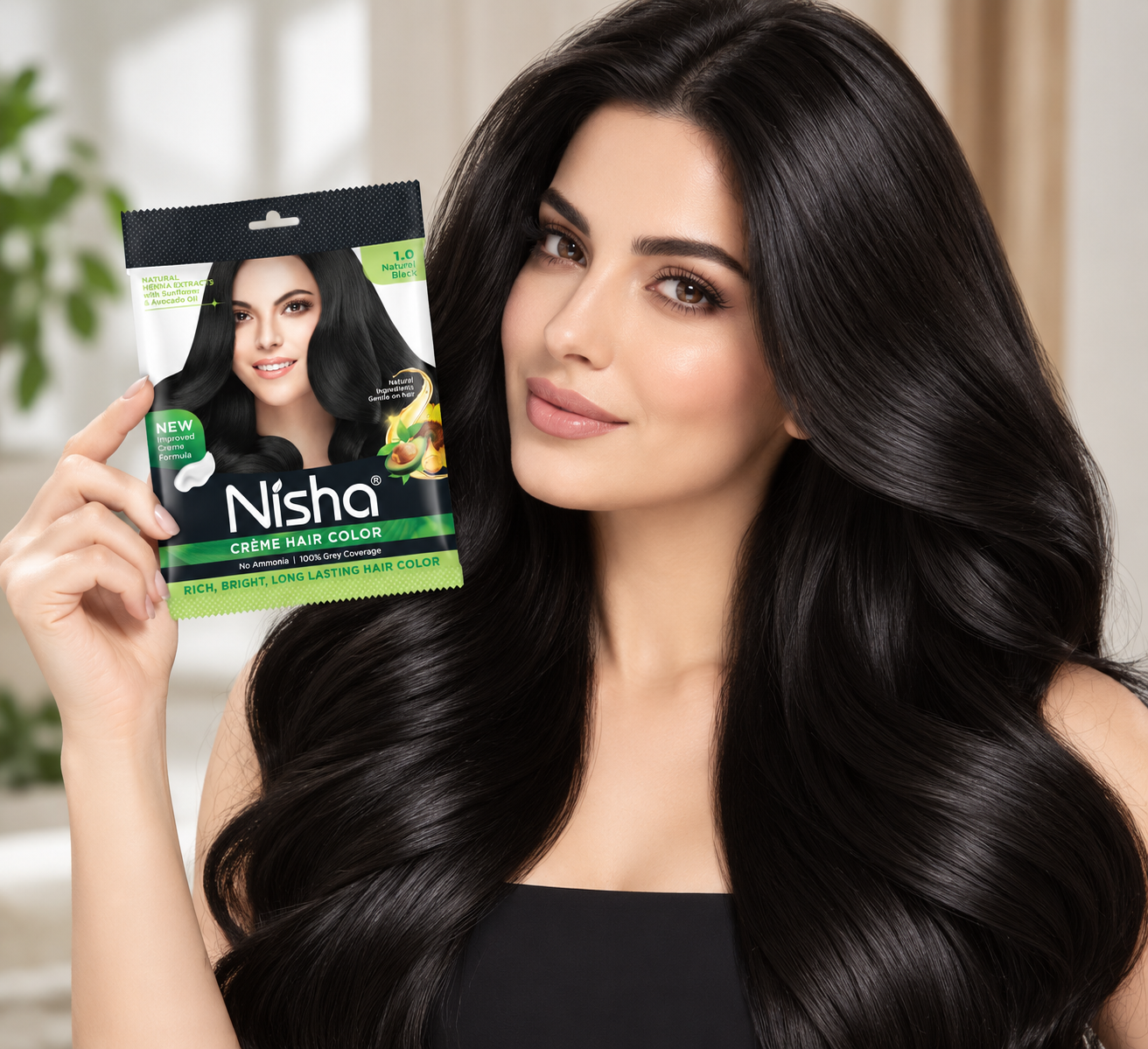
Which is the best hair color brand for grey hair in India? There is no single brand that is best for everyone. A good hair...