What Is Hair Color?
Hair color refers to cosmetic products designed to change, enhance, refresh, or add color to the hair.
Different hair-color products are formulated to produce different types of results. Some are primarily designed to deposit color, while other formulations can interact more deeply with the hair fiber to create a longer-lasting change.
The result is influenced by the color you start with and the color you want to achieve. For example, applying a dark brown shade to naturally light hair may create a noticeably different result from applying the same shade to naturally black hair.
Previously colored hair can also behave differently from untreated hair. For this reason, choosing a hair color should involve more than simply selecting a shade from a package.
How Does Hair Color Work?
To understand how hair color works, it helps to understand the basic structure of a hair strand.
The outermost part of the hair fiber is called the cuticle. It consists of overlapping protective cells that surround the inner parts of the hair.
Underneath the cuticle is the cortex, which forms the main body of the hair fiber. Natural hair pigment, known as melanin, is located within the cortex.
Hair-color formulations interact with these structures in different ways. Deposit-focused colors primarily add color to the hair, while permanent coloring systems can involve changes that allow color-forming ingredients to interact within the hair fiber.
This is one reason why permanent and non-permanent hair colors should not be treated as identical products. Their formulations, application methods, longevity, and effects on the hair can differ.
Hair type also matters. Yuthika’s educational explanation of hair coloring notes that natural pigment is housed in the cortex and that factors such as starting hair color and hair type can influence how coloring behaves.
What Gives Hair Its Natural Color?
Your natural hair color is primarily determined by melanin, the pigment responsible for the color of hair.
The amount and type of melanin present in the hair contribute to the range of natural shades seen in people, from black and dark brown to lighter brown, blonde and red tones.
When hair grows with reduced or absent visible pigment, it can appear grey or white. This is why grey coverage is one of the most common reasons consumers choose hair color.
Once hair has grown out of the scalp, its existing pigment does not naturally change in the same way that newly growing hair can. Cosmetic hair coloring is therefore used when someone wants to alter or cover the visible color of existing hair.
Why Does the Same Hair Color Look Different on Different People?
Have you ever seen a hair-color shade on a box or another person and wondered why it did not look exactly the same when you tried it?
This is completely understandable because the final appearance of hair color depends on several factors.
1. Your Starting Hair Color
Your current hair color is one of the most important factors.
A brown shade applied to black hair may appear deeper than the same shade applied to medium brown hair. Similarly, a warm shade can look different depending on the underlying pigment already present in the hair.
2. Previous Hair Color
If your hair has already been colored, the existing artificial pigment can affect the new result.
This is particularly important when someone tries to make a major color change over previously colored hair.
3. Hair Texture
Fine, thick, coarse, straight, curly and chemically treated hair can have different characteristics.
These differences can affect how quickly hair absorbs or releases color.
4. Hair Condition
Dry, porous or chemically treated hair may respond differently from untreated hair.
5. The Hair-Color Formula
Permanent, semi-permanent, henna-based, crème, shampoo-based and gel formulations can behave differently.
Always follow the specific instructions supplied with the product rather than assuming that every hair color should be applied in exactly the same way.
How Permanent Hair Color Works
Permanent hair color is designed to produce a longer-lasting color change than temporary or deposit-only products.
Depending on the formulation, permanent coloring systems can alter the existing pigment and allow color-forming ingredients to interact within the hair fiber.
Because the treated portion of hair retains the cosmetic color while new hair continues to grow, natural or previously uncolored roots eventually become visible.
This is why people who regularly use permanent hair color may need root maintenance as their hair grows.
The exact chemistry and processing time vary between products, so the manufacturer’s instructions should always take priority.
Yuthika Natural offers a range of crème hair-color products with multiple shade families, including black, brown, chocolate, burgundy and blonde options.
How Semi-Permanent and Non-Permanent Hair Color Works
Non-permanent and semi-permanent hair colors are generally designed for a lower-commitment color change than permanent hair color.
Depending on the formulation, these products primarily deposit color on or near the outer portions of the hair. The color gradually becomes less visible as the hair is washed.
This type of hair color can be useful for people who want to refresh their shade or experiment with color without committing to the same type of lasting change associated with permanent color.
However, durability varies by formulation, shade, hair condition, washing frequency and other factors. Always check the product label for its specific claims.
Yuthika Natural also publishes educational content specifically addressing semi-permanent color, so this article should link to that resource rather than repeating the entire subject.
How Henna-Based Hair Color Works
Henna-based hair color uses henna or henna-based formulations to add color to the hair.
Henna is a plant-derived coloring material obtained from the Lawsonia plant and has a long history of cosmetic use.
However, not every product described as “natural,” “herbal,” or “henna-based” has the same ingredients or formulation. Consumers should therefore check the product label and follow the manufacturer’s directions.
Yuthika Natural has a dedicated natural and herbal hair-color range that includes henna-based and other hair-color formats.
The company also lists Nisha hair-color products in multiple shades and formats.
How Crème Hair Color Works
Crème hair color is formulated with a creamy consistency that can make section-by-section application convenient.
Depending on the product, crème hair color can be designed for purposes such as grey coverage, color enhancement or changing the overall appearance of the hair.
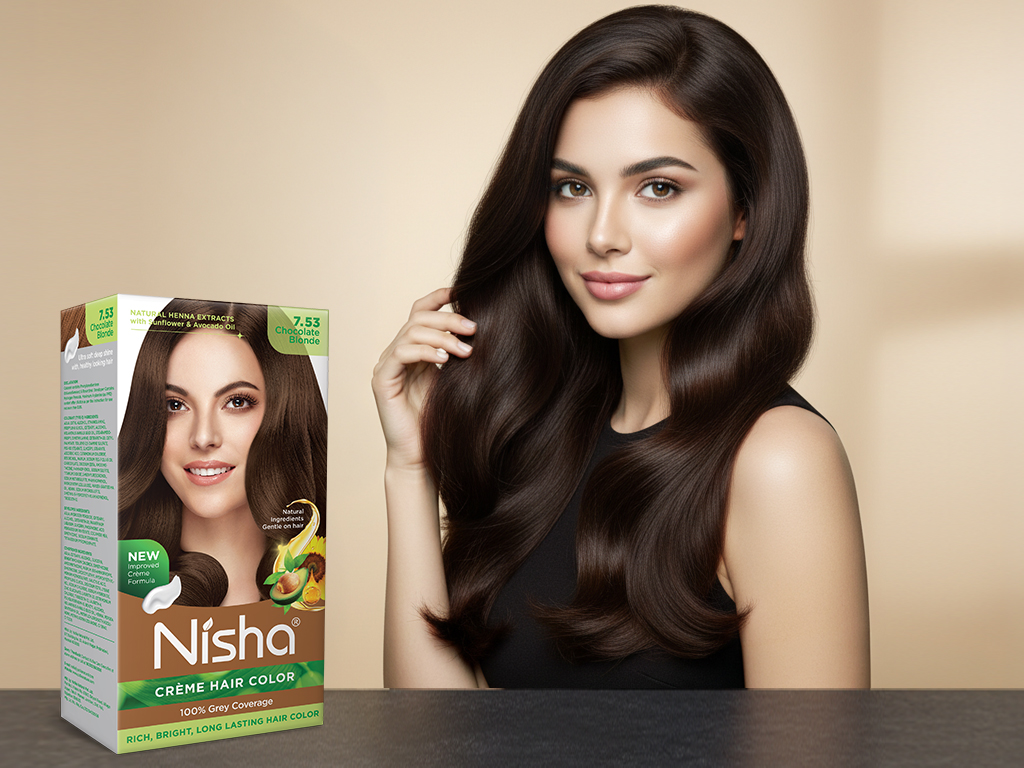
Yuthika’s crème category currently includes products from brands such as Nisha and Oreno, with shades ranging from Natural Black and Dark Brown to Natural Brown, Chocolate Brown and other shade families.
When selecting a crème hair color, consider your starting shade, desired result and the product’s stated purpose.
How Shampoo-Based Hair Color Works
Shampoo-based hair color combines a shampoo-style application format with hair-coloring functionality.
This format can appeal to consumers who prefer a familiar application process and convenient at-home use.
Yuthika Natural’s Nisha Quick Color shampoo-based range includes shades such as Original Black and Dark Brown in different pack formats.
The Nisha product page describes its shampoo-based hair color as an at-home coloring option designed for quick application and grey-hair coloring.
Always follow the exact directions supplied with the individual product, including application time, quantity, preparation and rinsing instructions.
How Hair Color Gel Works
Hair-color gel is another formulation designed for a specific application experience.
Gel formulations can provide a different texture and application method compared with powder or crème products.
Yuthika Natural’s current hair-color category includes Nisha Professional Herba Hair Color Gel and Nisha Professional Fruit Care Hair Color Gel in shades such as Original Black, Natural Black and Dark Brown.
The right choice depends on the application format, desired shade, intended use and the instructions for the particular product.
Permanent vs Semi-Permanent vs Temporary Hair Color
Understanding the broad differences between hair-color types can make choosing a product easier.
| Hair Color Type | General Purpose | Color Longevity | Typical Consideration |
|---|---|---|---|
| Permanent | Longer-lasting color change | Long-lasting on treated hair | New growth eventually becomes visible |
| Semi-permanent | Shade refresh or lower-commitment color | Gradually fades | Results depend on formulation and washing |
| Temporary | Short-term color effect | Generally shorter-lasting | Often removed more readily through washing |
| Henna-based | Plant-derived color application | Varies by formulation | Check ingredients and product directions |
These are general categories rather than a substitute for product-specific instructions. Different products within the same category can have significantly different formulations and performance.
How Does Hair Color Cover Grey Hair?
Grey hair coverage is one of the most common reasons consumers choose hair color.
Grey or white hair contains less visible natural pigment than pigmented hair. As a result, it can interact with added color differently.
If grey coverage is your primary goal, select a product that specifically states that it is designed for grey coverage.
Yuthika Natural’s hair-color portfolio includes products marketed for grey coverage across different formats, including crème and henna-based options.
For the best result, follow the product’s application instructions rather than shortening or extending the processing time yourself.
Why Does Hair Color Fade?
Hair color can change in appearance over time even when a product is designed to be long-lasting.
Common factors that can affect the appearance of colored hair include:
- Frequent washing
- Sun exposure
- Heat styling
- Hair porosity
- Previous chemical treatments
- Water exposure
- The specific hair-color formulation
The American Academy of Dermatology notes that sun exposure can make dyed hair weak, dry, rough, faded and brittle, which makes protecting colored hair from excessive sunlight an important part of hair care.
What Happens to Hair During Coloring?
The exact process depends on the type of hair-color formulation.
With deposit-focused products, color is primarily added to the hair’s surface or outer regions.
With permanent coloring systems, the process can involve changes to the hair’s environment that allow color-forming ingredients to interact within the hair fiber.
These different mechanisms explain why permanent and non-permanent colors have different longevity and behavior.
It is also important to remember that changing hair color significantly—especially by lightening it—can require a more intensive process than simply depositing a darker shade.
The American Academy of Dermatology recommends staying within about three shades of your natural color when possible because lightening hair by more than three shades generally requires higher peroxide levels and can cause more damage.
How to Choose the Right Hair Color
Choosing the right hair color starts with understanding what you want the product to achieve.
1. Start With Your Current Hair Color
Look at your natural or current color before choosing a new shade.
2. Decide Your Goal
Are you trying to cover grey hair, make your hair darker, refresh your current color, add warmth, or make a dramatic change?
3. Consider Your Hair Condition
Hair that is already dry, brittle or heavily processed may require extra care before another chemical coloring process.
4. Choose the Right Format
You can choose between different formats such as crème, henna-based, shampoo-based and gel hair color depending on your preferences and the product’s intended use.
5. Consider Maintenance
Think about how often you are willing to refresh your roots or overall color.
How to Choose a Hair Color Shade
If you are coloring your hair at home for the first time, a shade relatively close to your current color can be easier to manage.
The American Academy of Dermatology recommends choosing a dye within three shades of your natural color and notes that dyeing darker is generally less damaging than significantly lightening the hair.
Yuthika Natural’s hair-color collection currently includes a wide variety of shades, including Natural Brown, Dark Brown, Chocolate Brown, Golden Brown, Light Brown, Burgundy, Mahogany, Copper Red, Flame Red, Blonde and multiple black shades.
When comparing shades, always consider your current hair color rather than expecting the package shade to appear exactly the same on every person.
Hair Color for Different Hair-Color Goals
Hair Color for Grey Coverage
Choose a product specifically designed for grey coverage and follow its instructions carefully.
Hair Color for Darker Hair
Choosing a darker shade can create a richer, deeper appearance and is generally a simpler color direction than dramatically lightening naturally dark hair.
Hair Color for Brown Tones
Natural brown, dark brown, chocolate brown and golden brown shades provide different interpretations of the brown color family.
Hair Color for Red and Burgundy Tones
Burgundy, mahogany, copper and red shade families can create warmer or more expressive looks.
Hair Color for a Major Transformation
If you want to move significantly lighter than your natural shade, professional advice can be valuable because major lightening can involve more intensive chemical processing.
Hair Color Safety: What You Need to Know
Hair color should always be used according to the instructions and warnings supplied with the specific product.
The U.S. Food and Drug Administration recommends performing a patch test before every use of hair dye.
Important precautions include:
- Follow all package instructions.
- Perform the recommended patch test before use.
- Wear gloves during application.
- Do not leave the product on longer than instructed.
- Rinse the scalp thoroughly after coloring.
- Keep hair dye away from the eyes.
- Never use ordinary hair dye on eyebrows or eyelashes.
- Do not mix different hair-color products.
- Keep hair-color products away from children.
The FDA also advises against dyeing hair when the scalp is irritated, sunburned or damaged and recommends waiting at least 14 days after bleaching, relaxing or perming before using hair dye.
What Is a Hair-Dye Patch Test?
A patch test is a preliminary skin test used to check whether you may develop a reaction to a hair-dye product.
The FDA recommends testing hair dye before every use, even if you have used the same product previously without experiencing a reaction.
Follow the exact patch-testing procedure provided by the manufacturer. If you develop a rash, redness, swelling, burning or itching, do not proceed with hair coloring and seek appropriate medical advice.
How to Care for Colored Hair
Choosing a hair color is only one part of maintaining the appearance of colored hair. Proper aftercare can help hair remain manageable and maintain its appearance.
Use a Suitable Conditioner
Conditioning can help improve manageability and reduce friction during detangling.
Yuthika Natural offers hair-care products such as Nisha Shampoo and Conditioner as part of its wider hair-care portfolio.
Reduce Excessive Heat
Frequent high-temperature styling can contribute to dryness and damage. Use appropriate heat protection and avoid unnecessary high temperatures.
Protect Hair From Excessive Sun Exposure
Sun exposure can affect both the condition and appearance of colored hair. The American Academy of Dermatology recommends protecting hair from the sun, including wearing a wide-brimmed hat when outdoors.
Avoid Unnecessary Chemical Processing
Repeated chemical processing can contribute to dryness and brittleness. Follow the manufacturer’s recommended application and maintenance schedule.
Yuthika Natural Hair Color Range
Yuthika Natural offers a broad portfolio of hair-color products designed around different formulations, shades and application preferences.
The current online range includes:
- Nisha Natural Henna Based Hair Color
- Nisha Naturemate Natural Henna Based Hair Color
- Nisha Quick Color Henna Based Hair Color
- Nisha Crème Hair Color
- Nisha Naturemate Cream Hair Color
- Nisha Quick Color Shampoo Based Hair Color
- Nisha Professional Fruit Care Hair Color Gel
- Nisha Professional Herba Hair Color Gel
The Yuthika Natural Hair Color collection allows consumers to explore available shades and formats.
For consumers specifically interested in crème formulations, the Crème Hair Color collection includes multiple shade families.
For consumers interested in shampoo-based application, Yuthika Natural also provides a dedicated Shampoo Based Hair Color collection.
Those looking for professional gel formulations can explore the Nisha Herba Gel range.
Why Understanding How Hair Color Works Matters
Understanding the basics of hair color helps you make better decisions before choosing a product.
Instead of selecting a shade only because it looks attractive on a package, consider your current hair color, desired result, grey coverage requirements, hair condition, previous chemical treatments and preferred application format.
Understanding these factors also helps explain why a particular hair color may look different on you compared with another person.
For a broader overview of natural, herbal and professional hair-color options, you can explore Yuthika Natural’s natural and herbal hair-color guide.
Frequently Asked Questions About How Hair Color Works
How does hair color work?
Hair color works by adding, depositing or chemically forming color within or around the hair fiber, depending on the formulation. Permanent coloring systems can create longer-lasting changes, while temporary and semi-permanent products generally provide shorter-lasting effects.
How does permanent hair color work?
Permanent hair color is formulated to create a longer-lasting color change. Depending on the product, the process can involve altering existing pigment and allowing color-forming ingredients to interact within the hair fiber.
How does semi-permanent hair color work?
Semi-permanent hair color generally deposits color closer to the hair’s outer layers and gradually becomes less visible with washing. The exact longevity depends on the formulation and hair characteristics.
How does hair color cover grey hair?
Grey hair contains less visible natural pigment, so it can respond differently to added color. For reliable grey coverage, choose a product specifically formulated and marketed for grey coverage.
Why does the same hair color look different on different people?
The final appearance depends on the starting hair color, previous coloring, hair condition, texture, porosity and the specific formulation.
Does hair color damage hair?
Some coloring processes can contribute to dryness or brittleness, especially when hair is repeatedly processed or significantly lightened. The American Academy of Dermatology recommends staying relatively close to your natural shade when possible to reduce the need for stronger lightening processes.
Is henna a hair color?
Yes. Henna is a plant-derived coloring material used in certain hair-color products. However, formulations marketed as henna-based can vary, so always check the ingredient information and product directions.
How do I choose the right hair color?
Start with your current hair color, desired result, grey coverage needs, hair condition and preferred application format. For a first-time color change, choosing a shade relatively close to your natural color can be easier to manage.
Should I patch test hair dye?
Yes. The FDA recommends performing a patch test before every use of hair dye according to the manufacturer’s instructions.
Can I color my hair at home?
Many hair-color products are designed for at-home use. However, the application method varies by product. Always read and follow the instructions, perform the recommended patch test, use the appropriate protective equipment and do not exceed the stated processing time.
How long does permanent hair color last?
Permanent hair color is designed to remain in the treated hair for a longer period than temporary or semi-permanent color. However, new hair growth eventually reveals the natural or previously uncolored roots.
Understanding Hair Color Before You Color
Understanding how hair color works can make choosing and using hair color much easier.
The final result is influenced by much more than the shade printed on the package. Your starting hair color, natural pigment, hair texture, hair condition, previous treatments, formulation and application method can all affect the result.
Permanent, semi-permanent, temporary, henna-based, crème, shampoo-based and gel formulations serve different purposes and offer different application experiences. The best choice depends on your desired result and the product’s intended use.
If you are looking for hair-color options across different formats and shade families, explore the Yuthika Natural Hair Color collection.
And if you are coloring your hair at home, remember the fundamentals: choose an appropriate shade, read the product instructions carefully, perform the recommended patch test, follow the stated processing time and care for your colored hair afterward.
With the right knowledge and the right product, hair coloring can become a more informed and confident part of your beauty routine.