
Hair Care Routine for Damaged and Weak Hair
Damaged and weak hair can look dry, rough, dull, and lifeless. You may also notice split ends, frizz, and frequent breakage while combing. Heat styling,...


Category:Skin Care
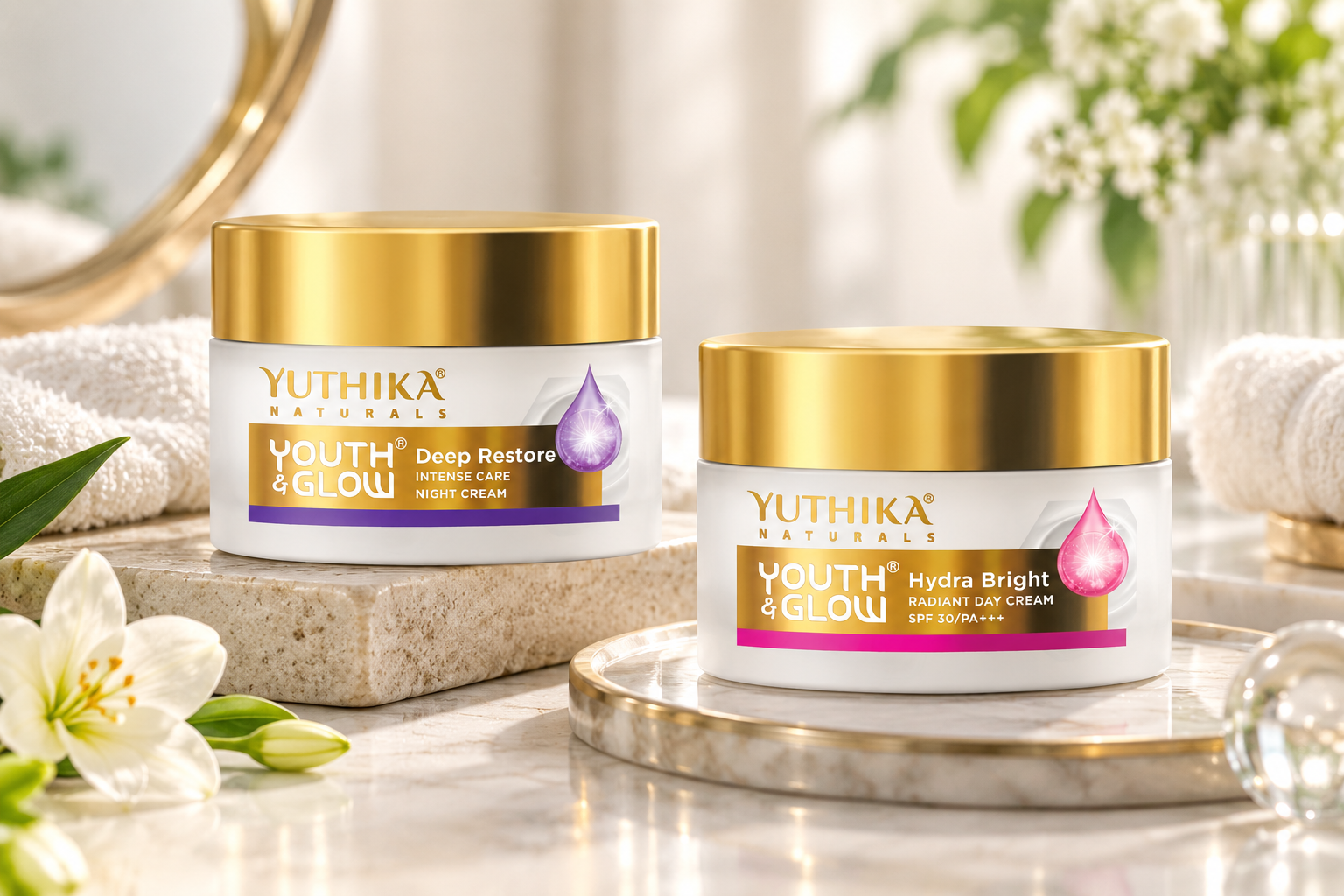
Day cream vs night cream—what’s the difference? Day cream is designed to moisturize and support the skin during daytime, while night cream is formulated for your evening skincare routine and typically focuses on moisturization while the skin is at rest overnight. Day creams are generally designed to feel comfortable during daytime activities and may be paired with sunscreen, while night creams can provide richer overnight moisturization.
Both can have a place in a skincare routine, but they serve different purposes.
What Is the Main Difference Between Day Cream and Night Cream?
The main difference between day cream vs night cream is when and how they are intended to be used.
A day cream is designed for daytime skincare. Its primary role is usually to provide hydration and moisturization while fitting comfortably into a morning routine.
A night cream is designed for evening use. It generally focuses on keeping the skin moisturized and nourished throughout the night.
Here’s a simple comparison:
| Feature | Day Cream | Night Cream |
| When to use | Morning/daytime | Evening/night |
| Main purpose | Daytime hydration and moisturization | Overnight moisturization and skin care |
| Texture | Often lighter | Can be richer |
| Used before sunscreen | Yes, when separate SPF is required | No |
| Used before makeup | Can be | Not usually |
| Part of morning routine | Yes | No |
| Part of night routine | Not usually | Yes |
| Sunscreen replacement | Only if it provides adequate labeled SPF; otherwise no | No |
The exact benefits depend on the individual formulation rather than the words “day” or “night” alone.
What Is a Day Cream?
A day cream is a facial moisturizer designed primarily for use during the daytime.
Throughout the day, skin is exposed to changing environmental conditions, air conditioning, pollution, heat and sun exposure.
A day cream helps maintain skin hydration and can support a soft, comfortable skin feel.
Depending on its formulation, a day cream may provide benefits such as:
Some day creams contain SPF, while others do not.
If your day cream does not provide adequate sun protection, use a separate broad-spectrum sunscreen as part of your morning routine.
What Is a Night Cream?
A night cream is a facial moisturizer designed to be used as part of an evening skincare routine.
Its primary purpose is usually to keep the skin moisturized while you sleep.
Depending on the formulation, a night cream may focus on:
Night creams can sometimes have a richer texture than day creams because they do not need to sit underneath makeup or sunscreen.
However, not every night cream is necessarily heavy. Texture depends on the formulation.
Why Do Day and Night Creams Have Different Formulations?
Your skincare requirements can differ between morning and evening.
During the day, many people want a moisturizer that:
At night, there is no need to layer sunscreen or makeup.
This allows night products to focus more specifically on overnight moisturization and other formulation-specific skincare benefits.
This difference in usage explains why brands often develop separate day and night moisturizers.
Do You Really Need a Day Cream and a Night Cream?
Not everyone needs two separate moisturizers.
Whether you need both depends on:
Some people are comfortable using one moisturizer both morning and evening.
Others prefer a lighter day cream and a richer night cream.
The advantage of separate products is that each can be selected for the specific needs of your morning and evening routines.
Is Day Cream the Same as Moisturizer?
A day cream is a type of moisturizer.
Its purpose generally includes maintaining hydration and helping the skin feel soft and comfortable during the day.
However, “moisturizer” is a broad category.
Moisturizers can include:
Therefore, every day cream can function as a moisturizer, but not every moisturizer is specifically formulated or marketed as a day cream.
Is Night Cream the Same as Moisturizer?
A night cream is also a type of moisturizer.
The difference is that it is specifically intended for an evening skincare routine.
Night creams are often formulated to provide sustained moisturization while you sleep and may have a richer consistency than daytime moisturizers.
The exact benefits depend on the ingredients and formulation.
Day Cream vs Night Cream: Which Is More Moisturizing?
Night creams are often richer than day creams, but this is not a universal rule.
A rich day cream can provide more moisturization than a lightweight night cream depending on their formulations.
Therefore, don’t assume that every night cream is automatically more moisturizing.
Instead, check:
Choose according to how your skin feels rather than simply choosing the product labeled “richer.”
Can You Use Day Cream at Night?
You can use some day moisturizers at night, depending on their formulation.
However, a dedicated night cream may provide a texture and skincare experience specifically designed for overnight use.
If your day cream contains sunscreen, there is generally no particular benefit to applying the SPF component before going to bed.
A separate night cream can therefore be a more purpose-specific choice for an evening routine.
Can You Use Night Cream During the Day?
Some night creams may technically moisturize your skin during the day, but they are not necessarily designed for daytime layering.
A richer night cream may feel:
More importantly, night cream should not be treated as a substitute for sunscreen.
If you use a night cream during the daytime, you still need appropriate sun protection when relevant.
Does Day Cream Replace Sunscreen?
Not necessarily.
This is an important distinction.
A regular day cream without adequate labeled SPF should not be considered a substitute for sunscreen.
If your day cream does not provide appropriate sun protection, apply a separate broad-spectrum sunscreen after moisturizing.
A simple morning sequence can be:
Cleanser → Serum if used → Day Cream/Moisturizer → Sunscreen → Makeup
Sunscreen should generally be the final skincare step before makeup.
Does Night Cream Need SPF?
No.
SPF is intended to protect the skin from UV exposure, so there is generally no need for sunscreen protection while you are sleeping.
Night creams can instead focus on moisturization and other formulation-specific skincare benefits.
Day Cream vs Night Cream for Dry Skin
People with dry skin may benefit from adequate moisturization both morning and evening.
During the day, choose a moisturizer that keeps your skin comfortable without interfering with sunscreen.
At night, a richer cream may help maintain hydration and reduce the feeling of dryness while you sleep.
For dry skin, consider formulations designed to support:
The most suitable product depends on your individual skin and climate.
Day Cream vs Night Cream for Oily Skin
Oily skin still needs appropriate moisturization.
A common mistake is assuming that oily skin should never use moisturizer.
Instead, people with oily skin may prefer lighter formulations that feel comfortable without excessive heaviness.
During the day, a lightweight moisturizer can work well underneath sunscreen.
At night, you can choose a night moisturizer suited to your skin type rather than automatically selecting the richest product available.
Day Cream vs Night Cream for Combination Skin
Combination skin typically has both oilier and drier areas.
A balanced moisturizer can be useful during the day, while nighttime skincare can be adjusted according to how the skin feels.
You don’t necessarily need to apply the same amount of product to every part of the face.
Choose formulations that provide sufficient hydration without making oil-prone areas feel excessively heavy.
Day Cream vs Night Cream for Normal Skin
Normal skin can still benefit from regular moisturization.
A lighter day cream can help maintain comfortable hydration throughout the day, while a night cream can provide overnight moisturization.
The goal is not to make the routine complicated.
If a simple routine keeps your skin comfortable, there is no need to add unnecessary products.
At What Age Should You Start Using Day and Night Cream?
There is no universal age at which everyone must begin using separate day and night creams.
Moisturization needs depend more on:
A basic routine of cleansing, moisturizing and appropriate daytime sun protection can be relevant for adults across different age groups.
More specialized products can then be selected according to individual skincare needs.
How Do You Apply Day Cream?
A simple morning routine can include:
Follow the individual product’s directions regarding quantity and application.
How Do You Apply Night Cream?
A simple nighttime routine can include:
You generally do not need to apply a very thick layer unless the product specifically instructs you to do so.
More product does not automatically produce better results.
Should You Apply Night Cream Every Night?
A night cream can generally be incorporated into a regular evening skincare routine when the formulation suits your skin.
How frequently you use it depends on:
A straightforward moisturizing night cream may be suitable for regular use, while products containing specific active ingredients may have different usage instructions.
Always follow the individual product directions.
Should You Apply Day Cream Every Morning?
Day cream can be used as part of a regular morning skincare routine when your skin benefits from moisturization.
After cleansing, apply your moisturizer and then use appropriate sun protection.
Consistency is generally more useful than making your skincare routine unnecessarily complicated.
What Ingredients Should You Look for in a Day Cream?
The right ingredients depend on what your skin needs.
For hydration and moisturization, commonly used skincare ingredients can include:
Rather than selecting a product because it contains the longest ingredient list, consider whether the complete formulation is appropriate for your skin type and routine.
What Ingredients Should You Look for in a Night Cream?
Night creams can contain moisturizing ingredients as well as other skincare ingredients depending on their intended benefits.
When choosing one, consider:
If you already use strong active skincare products at night, avoid adding additional products without considering how the formulations interact.
What Is the Correct Skincare Order for Daytime?
A basic daytime routine can be:
Step 1: Cleanser
Remove excess oil, sweat and impurities.
Step 2: Serum or treatment
Use this step only if it is part of your routine.
Step 3: Day cream or moisturizer
Apply your moisturizer evenly.
Step 4: Sunscreen
Apply appropriate broad-spectrum sunscreen to exposed skin.
Step 5: Makeup
Apply makeup after your skincare and sunscreen have settled.
This routine can be simplified or expanded according to individual needs.
What Is the Correct Skincare Order at Night?
A basic evening routine can be:
Step 1: Makeup/sunscreen removal
Remove makeup and daytime products thoroughly.
Step 2: Cleanser
Clean the skin.
Step 3: Serum or treatment
Apply treatment products according to their instructions.
Step 4: Night cream
Finish with your nighttime moisturizer.
Again, a skincare routine does not need many steps to be effective.
Day Cream vs Night Cream: Which Should You Choose?
If you’re deciding between them, first consider when you need the product.
Choose a Day Cream If:
Choose a Night Cream If:
Consider Using Both If:
Day Cream vs Night Cream: Quick Decision Guide
| If You Want… | Consider |
| Daytime hydration | Day cream |
| Moisturizer under sunscreen | Day cream |
| Moisturizer under makeup | Day cream |
| Overnight moisturization | Night cream |
| Richer evening texture | Night cream |
| Different AM and PM routines | Both |
| One simple moisturizer | A suitable moisturizer that works for your needs |
| Sun protection | Broad-spectrum sunscreen or appropriately labeled SPF product |
The important point is that day cream and night cream are complementary products, not competitors.
Do You Need Sunscreen After Day Cream?
Yes, if your day cream does not provide adequate labeled sun protection.
Apply sunscreen after moisturizer as part of your daytime skincare routine.
A day cream should not automatically be assumed to contain SPF.
Always check the product label.
Can Day Cream and Night Cream Help With Dry-Looking Skin?
Moisturizers can help improve skin hydration and make dry skin feel softer and smoother.
A day cream helps maintain moisturization during the day, while a night cream can support moisturization throughout your nighttime routine.
If persistent dryness, irritation, cracking or other skin concerns continue despite appropriate skincare, consider speaking with a dermatologist.
Is Night Cream Only for Mature Skin?
No.
Night cream is not exclusively for mature skin.
It is simply a moisturizer designed for nighttime use.
People of different adult age groups may use a night cream depending on their skin type and moisturization needs.
The formulation matters more than the age label.
Can You Use the Same Cream Morning and Night?
Yes, in some cases.
If you have a moisturizer that suits your skin and is appropriate for both morning and evening use, you may not need separate creams.
However, separate products can be useful if:
Your skincare routine should match your needs rather than follow an arbitrary number of products.
Is Night Cream Better Than Day Cream?
Neither is inherently better.
They serve different purposes.
Day cream is designed around your daytime skincare routine.
Night cream is designed around your evening skincare routine.
The better choice depends on when you’re using it and what your skin needs at that time.
Frequently Asked Questions About Day Cream vs Night Cream
What is the difference between day cream and night cream?
Day cream is designed for daytime moisturization and is generally formulated to fit underneath sunscreen or makeup. Night cream is designed for evening use and focuses on keeping the skin moisturized overnight.
Do I need both day cream and night cream?
Not necessarily. Some people can use one suitable moisturizer morning and night, while others prefer separate creams because their daytime and nighttime skincare needs are different.
Can I use day cream at night?
Depending on the formulation, you may be able to use a regular day moisturizer at night. However, if it contains SPF, the sunscreen component provides no meaningful benefit while you sleep.
Can I use night cream during the day?
A night cream may moisturize the skin during the day, but richer formulas may feel heavy underneath sunscreen or makeup. Night cream also does not replace daytime sunscreen.
Which is better: day cream or night cream?
Neither is universally better. Day cream is better suited to daytime moisturization, while night cream is designed for overnight moisturization.
Should I apply sunscreen after day cream?
Yes, if your day cream does not already provide adequate labeled sun protection. Apply a broad-spectrum sunscreen as the final skincare step before makeup.
Does night cream need SPF?
No. SPF is intended for UV exposure and is not needed while sleeping.
Is night cream necessary for oily skin?
Not necessarily, but oily skin can still need moisturization. Choose a texture appropriate for oily skin rather than assuming you need a rich, heavy cream.
Can I use night cream every night?
A basic moisturizing night cream can generally be incorporated into a regular evening routine when it suits your skin. Follow the directions for the specific product.
What should I apply first: serum or day cream?
Generally, serum or treatment products are applied before moisturizer, followed by sunscreen during the daytime. Follow the directions of the individual products in your routine.
What should I apply first: serum or night cream?
Serum is generally applied before night cream. Night cream typically acts as the moisturizing step toward the end of an evening skincare routine.
Can I use day cream without sunscreen?
A day cream can provide moisturization, but if it does not provide adequate labeled sun protection, it should not be treated as a sunscreen substitute.
Conclusion: Day Cream or Night Cream?
When comparing day cream vs night cream, the main difference is their intended role in your skincare routine.
Day cream is designed for daytime moisturization. It should feel comfortable during the day and work well alongside sunscreen and, when relevant, makeup.
Night cream is designed for overnight use. It focuses on maintaining moisturization and supporting soft, comfortable skin while you sleep.
You don’t necessarily have to choose one over the other.
If your skin benefits from different textures and moisturization levels at different times, using a day cream in the morning and a night cream in the evening can create a simple AM/PM skincare routine.
If one moisturizer already suits your skin both morning and night, separate products may not be necessary.
The most important approach is to choose products according to your skin type, formulation, routine and individual skincare needs—and remember that your daytime routine should include appropriate sun protection.
So, in the day cream vs night cream comparison, think of them as two products designed for different times of day: day cream for daytime moisturization and night cream for overnight moisturization.

Damaged and weak hair can look dry, rough, dull, and lifeless. You may also notice split ends, frizz, and frequent breakage while combing. Heat styling,...

Dry and rough hair can look dull, feel coarse, and become difficult to manage. Factors such as heat styling, frequent washing, harsh hair products, sun...

Indian hair is exposed to different challenges, including heat, humidity, pollution, hard water and changing weather. These factors can make hair dry, frizzy, dull or...