
Hair Care Routine for Damaged and Weak Hair
Damaged and weak hair can look dry, rough, dull, and lifeless. You may also notice split ends, frizz, and frequent breakage while combing. Heat styling,...


Category:Hair Color
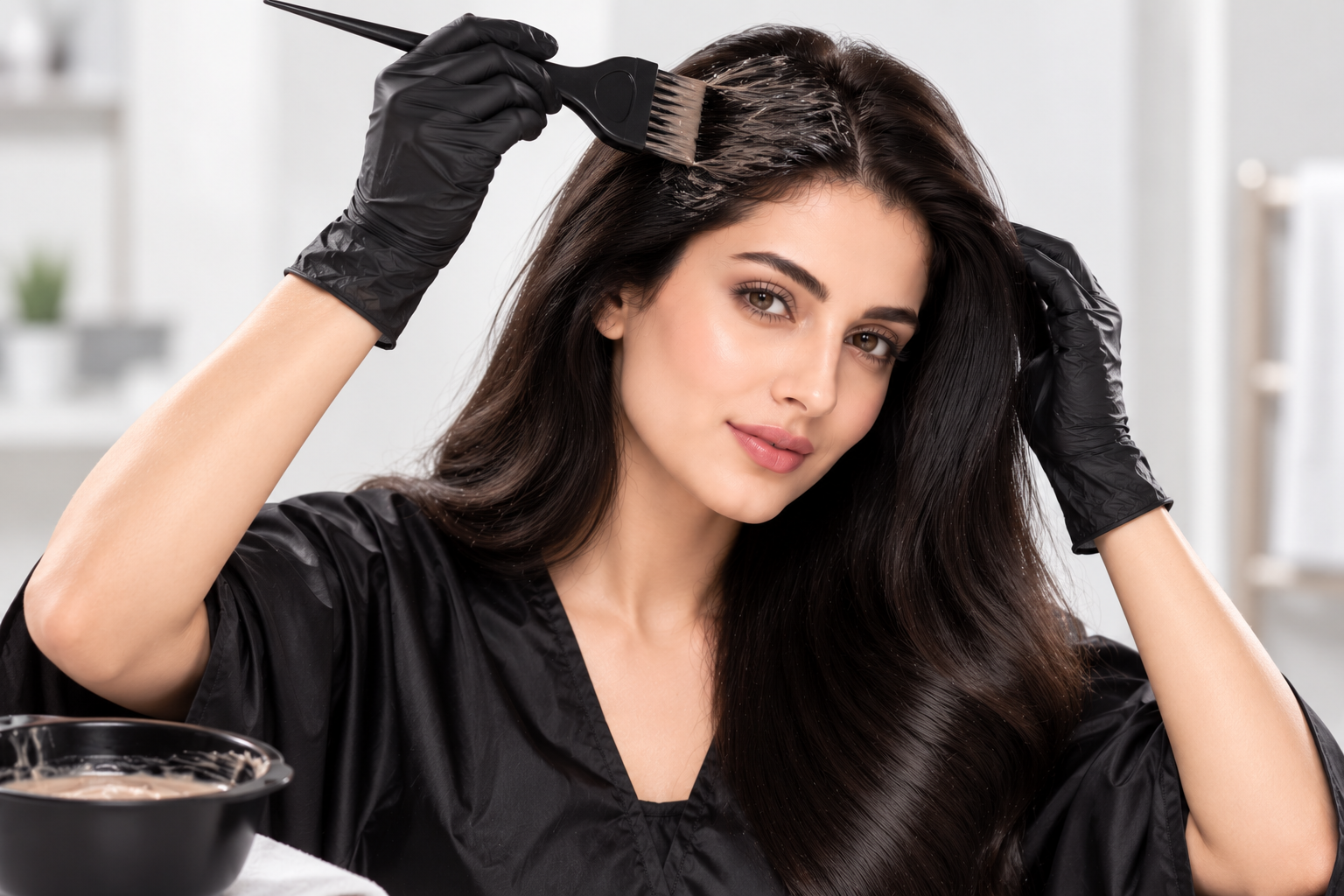
DIY hair color at home is a convenient way to cover grey hair, touch up roots, refresh your existing shade or change your hair color without visiting a salon. For better results, choose the right hair-color format and shade, perform the recommended allergy alert test, apply the product evenly and follow the exact processing time stated on the product.
At-home hair color is available in different formats, including crème hair color, shampoo-based hair color and henna-based hair color. The best option depends on whether your priority is grey coverage, quick application, shade variety or a henna-based formulation.
How Can You Color Your Hair at Home?
To color your hair at home, first choose a hair-color product and shade appropriate for your desired result. Read the complete instructions, perform the recommended allergy alert test, prepare the product as directed, divide your hair into sections, apply the color evenly, wait for the specified processing time and rinse according to the manufacturer’s directions.
The basic process is:
The exact process can vary considerably between crème, shampoo-based and henna-based hair colors.
What Type of Hair Color Is Best for DIY Hair Coloring?
The best hair color for home use depends on your main objective.
Crème hair color can be useful when you want controlled application, grey coverage and more shade choices.
Shampoo-based hair color can suit people who prioritize quick and convenient application, particularly for grey coverage and root touch-ups.
Henna-based hair color can be considered by people who prefer formulations featuring henna and herbal ingredients and want natural-looking shades.
Here’s a simple comparison:
| Hair Color Type | Best Suited For | Application Style |
| Crème Hair Color | Grey coverage, controlled application, shade variety | Color crème + developer system depending on product |
| Shampoo-Based Hair Color | Quick grey coverage and root touch-ups | Convenient shampoo-style application |
| Henna-Based Hair Color | Henna-based coloring and natural-looking shades | Powder mixed into a paste depending on product |
No single format is universally best. The individual product and your coloring goal matter more.
Is Crème Hair Color Good for Coloring Hair at Home?
Yes. Crème hair color can be suitable for DIY hair coloring because its creamy consistency allows controlled application across the roots and lengths.
It can be particularly useful when you want:
Nisha Crème Hair Color, available through Yutika Natural, uses a color crème and developer system and is designed for root-to-tip grey coverage.
The range also offers a broad selection of shades, making crème color useful for people who want more than basic black or brown.
Is Shampoo-Based Hair Color Easy to Use at Home?
Shampoo-based hair color can be a convenient option for people who prioritize quick at-home application.
It is especially relevant for:
Nisha Quick Color Shampoo Based Hair Color, for example, is designed for approximately five-minute coloring and grey coverage.
Despite the name, shampoo-based hair color is not an ordinary shampoo. It is a hair-coloring product and should be used only according to its coloring and safety instructions.
Can You Use Henna-Based Hair Color at Home?
Yes. Formulated henna-based hair colors can be designed for home use.
Nisha Natural Henna Based Hair Color, for example, uses a powder format that is mixed with water in a plastic or glass bowl to create a paste before application.
Its shade range includes options such as:
Henna-based hair color can be considered by people who want grey coverage while preferring a formulation featuring henna and traditionally used herbal ingredients.
Formulated henna-based hair color should not be confused with pure henna. The formulation, available shades and application process can be different.
How Do You Choose the Right Hair Color Shade at Home?
Choose a shade according to your natural hair color, percentage of grey hair and desired final appearance.
For subtle, natural-looking results, consider shades relatively close to your existing hair color.
Natural Black
Natural Black can suit naturally very dark hair and people who want subtle grey coverage.
Original Black
Original Black can provide a rich black appearance.
Dark Brown
Dark Brown can be a softer alternative to black and is useful for people who want a subtle brown transformation.
Natural Brown
Natural Brown can create a more visible brown appearance while remaining relatively understated.
Chocolate or Golden Brown
These shades can create a richer and more noticeable brown transformation.
Burgundy and Red Shades
Burgundy and other red-family shades can be considered when you want a more visible color change.
The final result can vary according to your starting hair color, so the shade shown on packaging should be considered a guide.
What Is the Best DIY Hair Color for Grey Hair?
The best DIY hair color for grey hair is a product specifically formulated for grey coverage, available in a shade appropriate for your natural hair and suitable for an application method you can follow correctly.
Crème, shampoo-based and henna-based hair colors can all be used for grey coverage when the specific formulation is designed for that purpose.
For natural-looking grey coverage, commonly considered shades include:
Yutika Natural’s Nisha portfolio includes grey-coverage options across crème, shampoo-based and henna-based formats.
How Do You Cover Grey Hair at Home?
To cover grey hair at home, choose a product specifically intended for grey coverage and pay particular attention to areas where grey strands are concentrated.
These commonly include:
Divide the hair into sections so that the color can be distributed evenly.
If you have concentrated grey roots, make sure these areas receive thorough application according to the product directions.
Correct processing time is equally important. Do not rinse the product earlier than instructed or leave it on longer in an attempt to improve coverage.
How Do You Touch Up Grey Roots at Home?
Grey roots can often be touched up without recoloring the entire hair length, depending on the product instructions.
A shampoo-based product can be convenient when quick root maintenance is the priority.
Nisha Quick Color Shampoo Based Hair Color, for example, is positioned for grey coverage and root touch-ups.
Crème hair color can also be useful because a brush allows more controlled placement around the roots, temples and hairline.
Always check whether the individual product provides instructions for root touch-ups.
Should You Wash Your Hair Before Coloring It?
There is no universal rule because preparation requirements vary between hair-color products.
Some formulations are applied to dry hair, while other products may provide different preparation instructions.
Therefore, the most accurate answer is:
Follow the preparation instructions supplied with your specific hair-color product.
Do not assume that instructions for one crème, shampoo-based or henna-based product apply to every other hair color.
Should You Do a Patch Test Before Coloring Your Hair?
Yes. Follow the allergy alert or patch-test instructions provided with your hair-color product before application.
Hair-color products can cause allergic reactions in some individuals.
Do not skip the recommended test because:
Always follow the safety directions supplied with the individual product.
Should You Do a Strand Test Before DIY Hair Coloring?
A strand test can be useful, particularly when trying a new product or shade.
It can help you understand how the selected shade may appear on your starting hair color.
Consider a strand test if:
The same shade can look different on black, brown, grey, white and previously colored hair.
How Should You Prepare for DIY Hair Color at Home?
Before starting, gather everything required for your specific product.
You may need:
Read the complete instructions before opening or mixing the product.
This helps prevent interruptions once the coloring process begins.
How Do You Apply Hair Color Evenly at Home?
Sectioning is one of the easiest ways to improve the consistency of DIY hair-color application.
Divide the hair into manageable sections.
Then work systematically rather than applying color randomly.
If grey coverage is your priority, give particular attention to the roots, temples and hairline.
For longer or denser hair, make sure you have enough product to cover all required sections.
Trying to stretch insufficient product across the hair can contribute to uneven results.
How Do You Mix Crème Hair Color at Home?
Crème hair-color preparation varies by product.
Nisha Crème Hair Color uses a color crème and developer system. The components are prepared according to the supplied instructions in a suitable non-metal container before application.
Do not:
Always use the proportions and process specified for the individual product.
How Do You Prepare Henna-Based Hair Color at Home?
Powder-based henna hair colors have a different preparation process.
Nisha Natural Henna Based Hair Color, for example, is mixed with water in a plastic or glass bowl until a paste is formed.
The paste is then applied to the hair according to the product instructions.
Because formulated henna-based hair color differs from pure traditional henna, don’t automatically use the preparation method you would use for ordinary henna powder.
Follow the instructions for the exact product and shade.
How Long Should You Leave Hair Color On?
Hair-color processing time depends entirely on the formulation.
There is no universal processing time for DIY hair color.
For example:
Nisha Quick Color Shampoo Based Hair Color: approximately 5 minutes according to current product instructions.
Nisha Natural Henna Based Hair Color: approximately 30 minutes for Natural Black, Original Black, Brown and Dark Brown, while Natural Brown and Burgundy Red specify approximately 60 minutes.
Other crème hair-color products have their own processing times.
This demonstrates why users should never assume that all hair colors need 10, 20, 30 or 60 minutes.
Follow the processing time printed on your exact product.
Does Leaving Hair Color on Longer Make It Work Better?
No. Leaving hair color on longer than recommended should not be used as a method to improve grey coverage or create a darker shade.
Hair-color products are formulated around specific application and processing instructions.
For better results:
Do not improvise by extending the processing period.
How Do You Rinse Hair Color After Application?
Once the recommended processing time is complete, rinse according to the manufacturer’s instructions.
Depending on the product, you may be instructed to rinse thoroughly until the water runs clear and then use a supplied conditioner or post-color treatment.
Don’t assume every product has the same rinsing process.
Follow the directions included with your specific hair color.
What Are the Most Common DIY Hair Color Mistakes?
Several avoidable mistakes can contribute to disappointing home hair-color results.
Choosing a Shade Only From the Packaging Model
Your starting hair color affects the final result.
Skipping the Allergy Alert Test
Hair-color safety instructions should be followed every time they are required.
Guessing the Mixing Ratio
Use the exact proportions stated by the manufacturer.
Applying Color Randomly
Section the hair and work systematically.
Missing Grey Roots
Pay particular attention to the hairline, temples, parting and roots.
Using Too Little Product
Make sure you have sufficient product for your hair length and density.
Ignoring Processing Time
Don’t rinse too early or leave the color on longer than instructed.
Treating Shampoo-Based Hair Color Like Regular Shampoo
It is still a hair-color product.
Assuming Henna-Based Means Pure Henna
A formulated henna-based hair color and pure henna powder are not necessarily the same.
Mixing Different Hair-Color Products
Do not combine products, colors or developers unless specifically instructed by the manufacturer.
How Much Hair Color Do You Need at Home?
The amount of hair color required depends on:
Short hair or root touch-ups may require less product.
Long, thick or dense hair can require significantly more.
Check the coverage guidance on the product before beginning. It is better to confirm that you have enough product before application than to run out halfway through.
How Often Should You Color Your Hair at Home?
There is no single schedule for everyone.
How often you need to recolor depends on:
Always follow the manufacturer’s recommendations regarding repeat applications.
Which Nisha Hair Color Can You Use at Home?
Yutika Natural offers different Nisha hair-color formats for different at-home coloring preferences.
Nisha Crème Hair Color
Nisha Crème Hair Color can be considered when you want controlled application, grey coverage and a wider choice of shades.
Its color crème + developer format suits users comfortable with a traditional home-coloring process.
Nisha Quick Color Shampoo Based Hair Color
This option focuses on speed and convenience.
It is particularly relevant for quick grey coverage and root touch-ups and uses a shampoo-style application method.
Nisha Natural Henna Based Hair Color
This range can suit people interested in henna-based coloring.
It offers shades including Natural Black, Original Black, Dark Brown, Brown, Natural Brown and Burgundy Red and uses a powder-to-paste preparation method.
Choosing between these formats depends on your shade, grey-coverage requirements and preferred application routine.
DIY Hair Color at Home: Quick Decision Guide
If you want quick grey coverage: consider shampoo-based hair color.
If you want more shade choices: consider crème hair color.
If you want precise root application: consider crème hair color.
If you prefer a henna-based formulation: consider henna-based hair color.
If you want natural-looking grey coverage: consider Natural Black, Original Black, Dark Brown or Natural Brown depending on your original hair color.
If you want a more noticeable transformation: explore Chocolate Brown, Golden Brown, Burgundy, Mahogany and other available fashion shades.
Frequently Asked Questions About DIY Hair Color at Home
Can I do hair color at home myself?
Yes. Many hair-color products are designed for at-home use. Choose a suitable format and shade, perform the recommended allergy alert test and follow the product’s preparation, application, processing and rinsing instructions.
What is the easiest hair color to apply at home?
Shampoo-based hair color can provide a quick and convenient application method, while crème hair color gives greater control over placement. The easiest option depends on your preferred coloring process.
What is the best DIY hair color for grey hair?
The best option is a product specifically formulated for grey coverage in a shade suitable for your natural hair. Crème, shampoo-based and henna-based products can all be options when designed for grey coverage.
How can I cover grey hair naturally at home?
For a natural-looking result, consider shades close to your original hair, such as Natural Black, Original Black, Dark Brown or Natural Brown. Henna-based formulations can also be considered by people specifically interested in henna-based coloring.
Can I color only my grey roots at home?
Yes, depending on the product. Shampoo-based hair color can be convenient for quick root touch-ups, while crème hair color allows controlled placement around specific grey areas.
Which is better for home coloring: crème or shampoo hair color?
Crème hair color can be preferable for controlled application and shade variety. Shampoo-based hair color can be preferable for speed and convenience. Neither is universally better.
Is henna-based hair color good for home use?
Yes, formulated henna-based hair colors can be designed for home use. Follow the individual product’s mixing, application, allergy-testing and processing instructions.
How long should I keep DIY hair color on?
Use only the processing time specified for your exact product and shade. Processing times vary significantly between shampoo-based, crème and henna-based hair colors.
Why does my hair color look different from the shade shown on the pack?
Your starting hair color, percentage of grey hair, previous coloring and selected formulation can all affect the final shade. Packaging images should be considered a guide rather than a guarantee of an identical result.
How do I prevent patchy hair color at home?
Divide your hair into sections, use enough product, apply systematically, cover roots and grey areas thoroughly and follow the specified processing time.
Is DIY hair color safe?
Hair-color products should be used according to their safety instructions. Follow the recommended allergy alert test, read all warnings and use the product only as directed.
Conclusion: What Is the Best Way to DIY Hair Color at Home?
The best way to DIY hair color at home is to choose a product suited to your goal, select an appropriate shade and follow the manufacturer’s instructions exactly.
For controlled application and more shade choices, crème hair color can be a practical option.
For quick grey coverage and convenient root touch-ups, shampoo-based hair color may be more suitable.
For people who prefer henna-based formulations and natural-looking shades, formulated henna-based hair color provides another at-home option.
Yutika Natural’s Nisha portfolio includes all three formats, giving consumers different choices according to their grey-coverage needs, desired shade and preferred coloring routine.
The most important rule is simple: don’t use every hair color the same way. Preparation, application and processing time vary by formulation.
Choose the right product, perform the recommended allergy alert test, apply the color evenly and follow the exact instructions for your chosen shade and format. These steps can make DIY hair coloring easier and help you achieve a more even, natural-looking result at home.
Damaged and weak hair can look dry, rough, dull, and lifeless. You may also notice split ends, frizz, and frequent breakage while combing. Heat styling,...
Dry and rough hair can look dull, feel coarse, and become difficult to manage. Factors such as heat styling, frequent washing, harsh hair products, sun...
Indian hair is exposed to different challenges, including heat, humidity, pollution, hard water and changing weather. These factors can make hair dry, frizzy, dull or...